Honours Research

Exploring honours projects, partnerships, and thematic studies grounded in NSW archaeology and heritage.
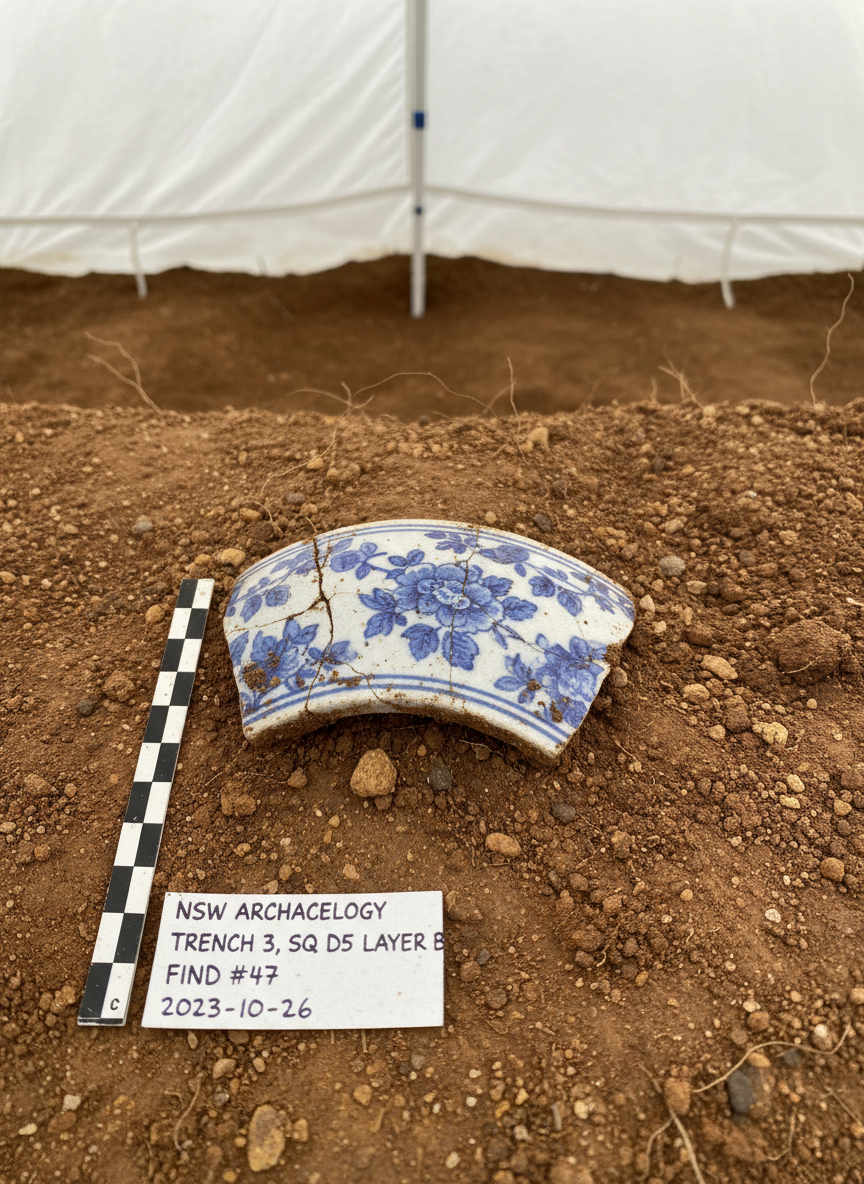
A close-up, highly detailed photographic study of a partially unearthed ceramic artifact at a New South Wales archaeological test pit. A fragment of blue-and-white transfer-printed pottery, its glazed surface cracked and soil-stained, rests in situ within compacted ochre and umber earth layers. A precisely positioned metric scale and a discreet, handwritten context label border the fragment, hinting at systematic excavation. Soft, diffused shade from a canopy tent creates even lighting, with subtle shadows defining the texture of soil clumps and tiny quartz grains. Shot from directly above with sharp focus and high resolution, the background gently softens at the frame’s edge. The mood is methodical and scholarly, highlighting the intersection of material culture, fieldwork, and careful documentation in heritage research.

Essays

Reviews

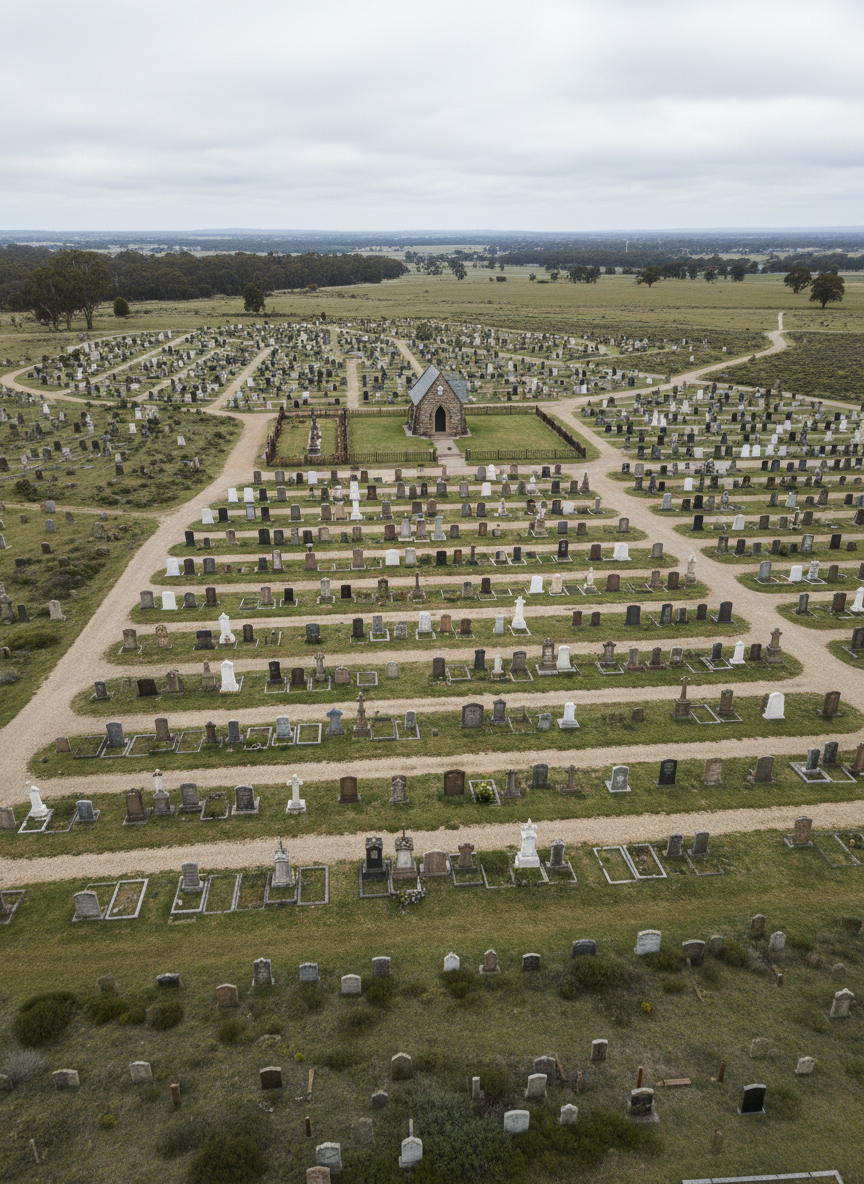
An expansive, aerial photographic view of a historic New South Wales cemetery integrated into the surrounding landscape. Neatly aligned rows of varied headstones—sandstone, marble, and granite—form subtle geometric patterns against a tapestry of muted green lawn, scattered native shrubs, and winding gravel paths. A small, ornate stone chapel with a slate roof anchors the upper third of the composition, while weathered iron fences segment family plots below. Soft overcast light from a high, clouded sky produces even, shadowless illumination, allowing intricate details to be clearly visible. The mood is contemplative and analytical, suitable for heritage mapping and landscape archaeology. Photographic realism with crisp focus across the entire frame, emphasizing spatial relationships and long-term human interaction with place.

Aya Nakamura

Working with this project deepened my understanding of community-led heritage; the research was meticulous, sensitive, and genuinely collaborative.

A meticulously arranged archival research desk in a quiet heritage reading room, viewed from a slightly elevated angle. At the center lies an open, yellowed ledger from a 19th-century New South Wales cemetery register, its inked names and dates beautifully preserved. Around it are neatly stacked acid-free boxes, a linen-bound notebook, a magnifying glass, and soft cotton gloves resting on a dark timber surface with visible grain. Diffused daylight filters through high sash windows, illuminating floating dust motes and casting gentle, ordered shadows. In the softly blurred background, tall shelves of labelled archival volumes recede in perspective. Photographic realism with sharp focus on the ledger and shallow depth behind, creating an atmosphere of quiet scholarship, precision, and respect for the fragility of historical memory.

Mateo García

The honours work on regional cemeteries has become a benchmark reference for our council’s planning and conservation decisions.